AI in Energy: Real-World Applications and Industry Developments
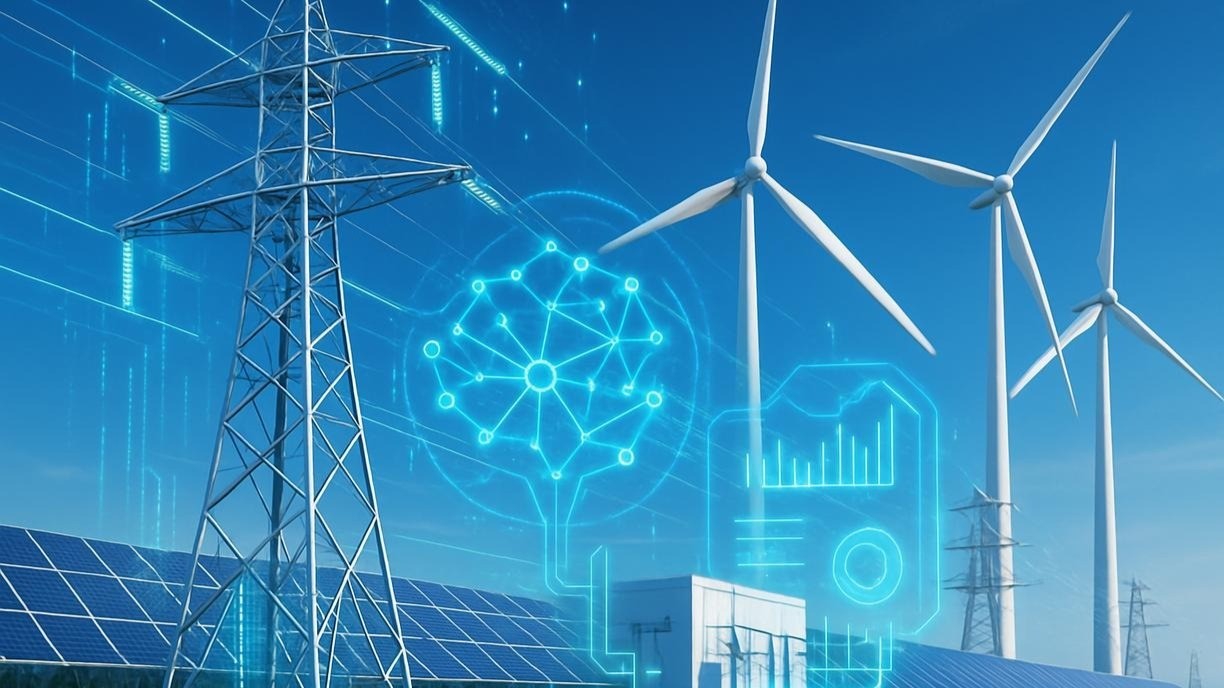
The energy sector stands at a critical inflection point.
As utilities grapple with aging infrastructure, accelerating climate change impacts, and surging demand from AI-powered data centers, artificial intelligence has emerged as both a solution and a necessity. Far from experimental pilots, AI applications in energy are delivering measurable results: reducing storm outages by 72%, achieving 80% customer satisfaction rates, and improving operational efficiency by up to 30%.
This analysis examines real-world AI implementations across the energy landscape, from predictive maintenance systems preventing equipment failures to conversational AI transforming customer experiences. Drawing on recent reports from consulting firms, industry leaders, and technology providers, we explore how energy companies are strategically deploying AI to build more resilient, efficient, and sustainable operations.
AI-Powered Grid Operations and Predictive Maintenance
Utilities are cautiously embracing artificial intelligence to modernize aging grid infrastructure and improve operational efficiency. AI-powered predictive maintenance systems are delivering some of the fastest returns for energy companies, with sensors embedded in circuit breakers, switch gears, and transmission lines feeding real-time data into AI systems that analyze patterns to forecast when components are likely to fail.
Duke Energy has developed a hybrid AI system that combines machine learning with expert diagnostics to identify high-risk equipment and monitor transformer fleet health. This approach has led to “more consistent identification of problematic equipment” and “improved planning decisions,” according to industry reports.
Startups are pushing these capabilities further. Rhizome works with utilities including Seattle City Light and Vermont Electric Power Company to map climate-driven risks using AI analysis of historical grid data, outage causes, and environmental threats. One Texas utility using Rhizome’s predictive model reduced storm-induced outages by 72% by identifying high-risk circuits for targeted infrastructure investment.
Source: Business Insider, “Utilities are tiptoeing into AI as climate change and data center growth add stress to the energy grid,” July 2025
Conversational AI Transforms Customer Experience
Energy companies are deploying AI-powered conversational systems to revolutionize customer service operations. Real-world implementations show significant improvements in both customer satisfaction and operational efficiency.
Octopus Energy’s AI email response system achieves 80% customer satisfaction rates, outperforming human agents’ 65% satisfaction scores. The system demonstrates how generative AI can handle customer inquiries more effectively than traditional approaches.
Ontario Power Generation partnered with Microsoft to develop ChatOPG, an AI assistant that provides employees with information access, question answering, and personal assistant capabilities to improve workplace productivity and safety.
In Europe, Italian gas supplier Enercom implemented voice-based virtual assistants to manage customer call surges during energy crises, automating responses to frequent questions while ensuring regulatory compliance with data privacy requirements.
Industry research indicates that 45% of energy suppliers are expected to use generative AI technologies like chatbots to improve customer experience, with the potential to reduce call center calls by over 60%.
Sources: Master of Code Global, “Generative AI in Energy and Utilities Sector,” May 2025; Intel, “Artificial Intelligence in the Energy Industry,” citing McKinsey research
Grid Modernization and Renewable Integration
AI is enabling seamless integration of renewable energy into existing grid infrastructure by analyzing data from smart meters, weather forecasts, and usage patterns to optimize grid planning and predict energy demand.
Xcel Energy, the first major utility targeting net-zero emissions by 2050, uses AI algorithms to predict renewable output and adjust grid operations in real-time. The company has “significantly improved efficiency by automating processes that were in place for decades,” enabling stable energy supply that supports sustainability goals.
With the U.S. aiming for 44% renewable power by 2050, AI-driven solutions are essential for managing variable renewable sources while maintaining grid stability.
McKinsey research demonstrates measurable benefits, with AI-powered scheduling helping prevent unnecessary field visits and improving worker productivity by up to 30%. Additionally, AI-driven recommendations have helped power plant operators boost heat rate optimization—the ability to efficiently convert fuel into electricity—by up to 5%.
Sources: BizTech Magazine, “AI revolutionizing grid planning in energy and utilities sector,” October 2024; Intel, “Artificial Intelligence in the Energy Industry,” citing McKinsey research
Field Operations and Workforce Enhancement
Beyond customer service and grid operations, utilities are adopting AI tools to improve fieldwork efficiency and safety. Computer vision technology is being deployed to automatically capture, identify, and digitize equipment data, improving data collection quality and speed while reducing manual site visits.
Avangrid launched “First Time Right Autopilot,” a generative AI tool trained on internal manuals and troubleshooting guides. Accessible on mobile devices, the chatbot provides real-time repair guidance to field technicians. For example, when a wind turbine goes offline, technicians can ask the AI assistant for step-by-step repair instructions based on contextual equipment data.
Since implementation, Avangrid reports faster repairs and reduced downtime, with the AI tool “empowering the workforce by providing field technicians with real-time access to expert-level support.”
Source: Business Insider, “Utilities are tiptoeing into AI as climate change and data center growth add stress to the energy grid,” July 2025
AI Consulting in Energy: Bridging Strategy and Execution
While platforms and tools are critical, many successful energy AI implementations are guided by specialized consulting expertise. Energy companies are recognizing that AI deployment requires more than technology, it demands strategic integration with existing business processes and systems.
MRE Consulting specializes in AI integration for energy trading systems, developing approaches to teach AI systems energy-specific terminology and market dynamics.
Slalom focuses on utility-wide AI transformation, with one recent implementation delivering 4-10% efficiency improvements across billion-dollar capital portfolios.
These consulting firms help bridge the gap between technological capability and business value, ensuring AI isn’t just deployed, but deployed strategically and sustainably. As Keith Farris, an MRE expert notes, “We are in the infancy of AI utilization in ETRM,” highlighting the critical role consultants play in navigating this emerging landscape.
Sources: MRE Consulting, “AI’s Role in Energy Trading: A Targeted Approach”; Slalom, “Transforming Utility Investments: AI-powered Capital Investment Planning”
Industry Outlook and Challenges
Energy companies face key obstacles in AI adoption: legacy IT systems that resist integration, talent shortages, and regulatory uncertainty. However, the industry is advancing through cloud migration, employee training, and regulatory engagement.
The Federal Energy Regulatory Commission is hiring technical experts and embracing innovation, signaling growing regulatory support. Looking ahead, 92% of executives plan AI-powered automation by 2026. While AI won’t replace core grid functions, analysts expect it to accelerate modernization efforts across the sector.
Sources: Business Insider, “Utilities are tiptoeing into AI as climate change and data center growth add stress to the energy grid,” July 2025; Master of Code Global, “Generative AI in Energy and Utilities Sector,” May 2025
Conclusion
The energy sector is shifting from traditional operations to intelligent, data-driven systems, with AI delivering proven results like predictive maintenance that reduces outages by 72% and customer service AI that outperforms human agents. As the industry faces aging infrastructure, climate impacts, and rising demand, AI becomes essential for building resilient, efficient, and sustainable energy systems, with targeted applications already delivering measurable improvements in operational efficiency, customer satisfaction, and grid reliability despite full adoption remaining in early stages.